Our own account of this poem, "the German Iliad"
Key
| Textual Feature | Appearance |
|---|---|
| Whitman's hand | blue double overline and underline |
| Highlighting | yellow background with top and bottom border |
| Paste-on | gray box with black borders |
| Laid in | white box with black borders |
| Erasure | white text with dark gray background |
| Overwritten | brown with strikethrough |
 1
1
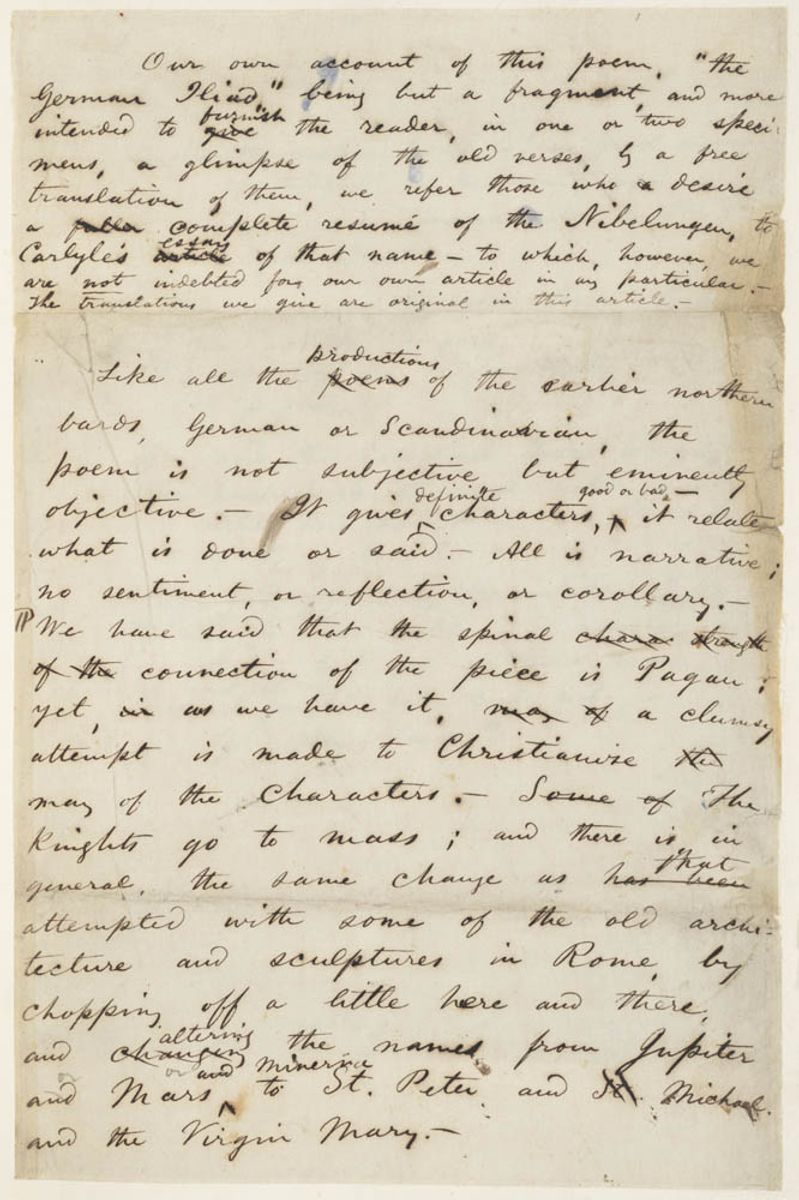
Our own account of this poem, "the
German Iliad," being but a fragment, and more
intended to give furnish the reader, in one or two speci‑
mens, a glimpse of the old verses, by a free
translation of them, we refer those who a desire
a fuller complete resumé of the Nibelungen, to
Carlyle's article essay of that name—to which, however, we
are not indebted for our own article in any particular.—
The translations we give are original in this article.—
Like all the poems productions of the nearlier northern
bards, German or Scandinavian, the
poem is not subjective but eminently
objective.—TIt gives ^definite characters, —^good or bad,— it relates
what is done or said.—All is narrative;
no sentiment, or reflection, or corollary.—
We have said that the spinal chara strength
of the connection of the piece is Pagan;
yet, in as we have it, many of a clumsy
attempt is made to Christianize the
many of the characters.— Some of The
knights go to mass; and there is, in
general, the same change as has been that
attempted with some of the old archi‑
tecture and sculptures in Rome, by
chopping off a little here and there,
and changing altering the names from Jupiter
and or Mars ^or and Minerva to St. Peter and St. Michael
and the Virgin Mary.—
 [begin surface 4]
 2
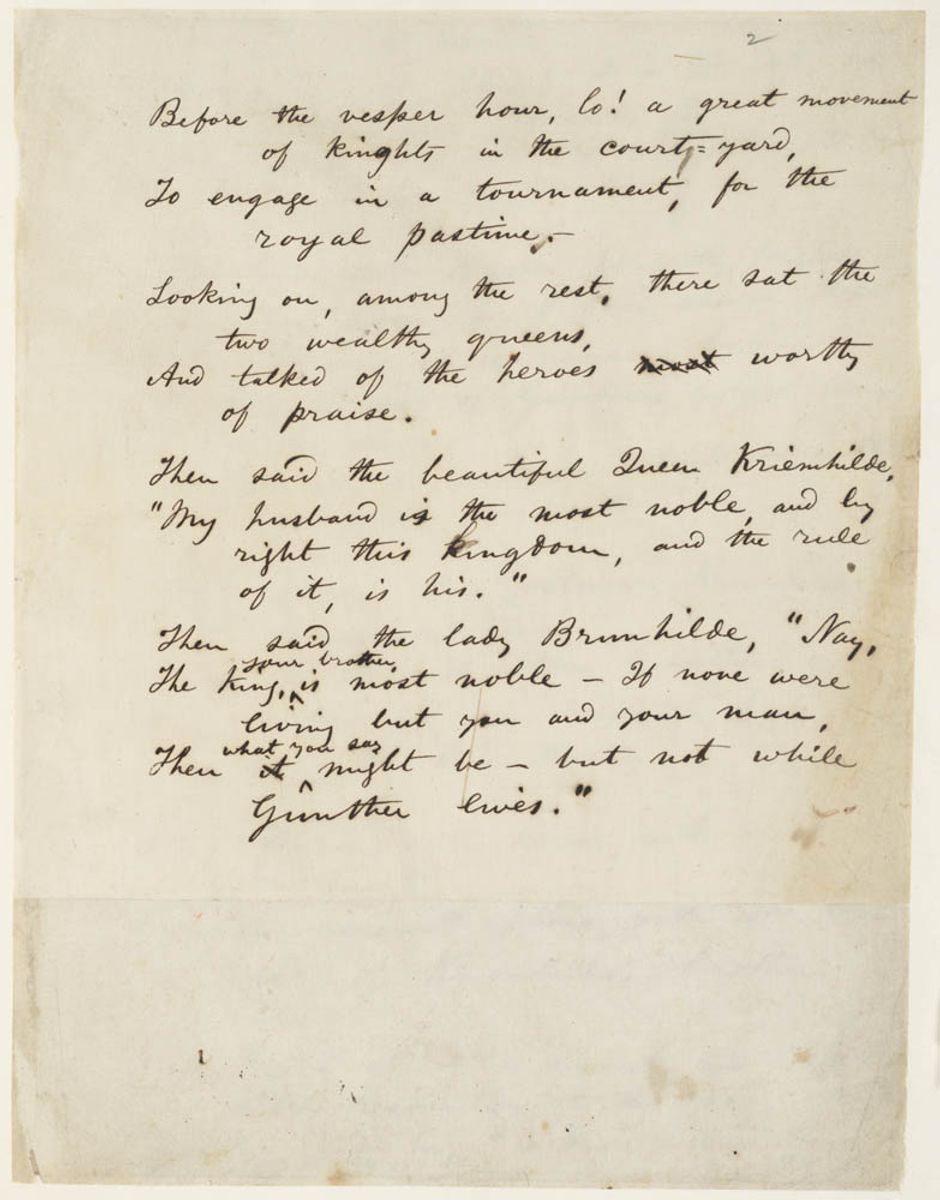
Before the vesper hour, lo! a great movement
of knights in the court‑yard,
To engage in a tournament, for the
royal pastime.—
Looking on, among the rest, there sat the
two wealthy queens,
And talked of the heroes
2
Before the vesper hour, lo! a great movement
of knights in the court‑yard,
To engage in a tournament, for the
royal pastime.—
Looking on, among the rest, there sat the
two wealthy queens,
And talked of the heroes 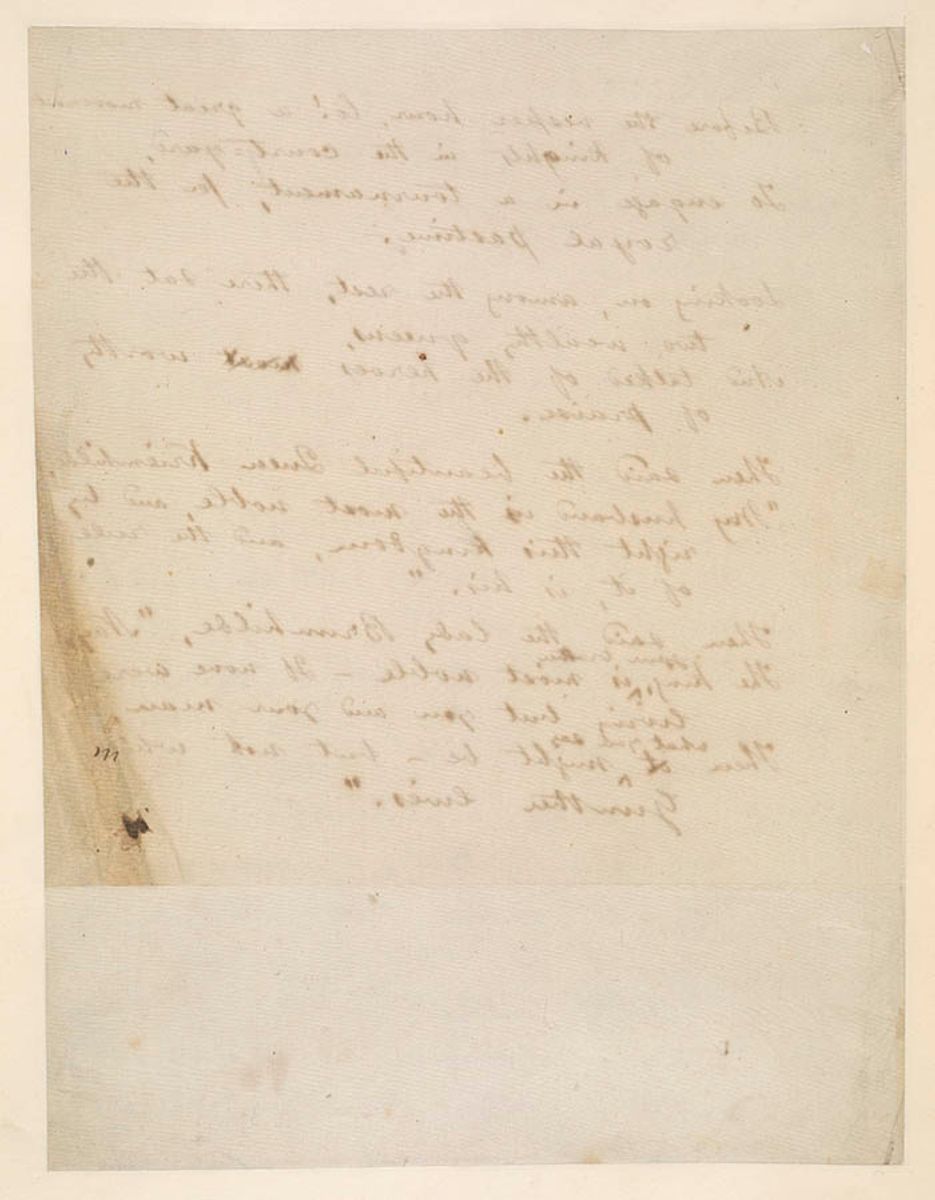 [begin surface 6]
 3
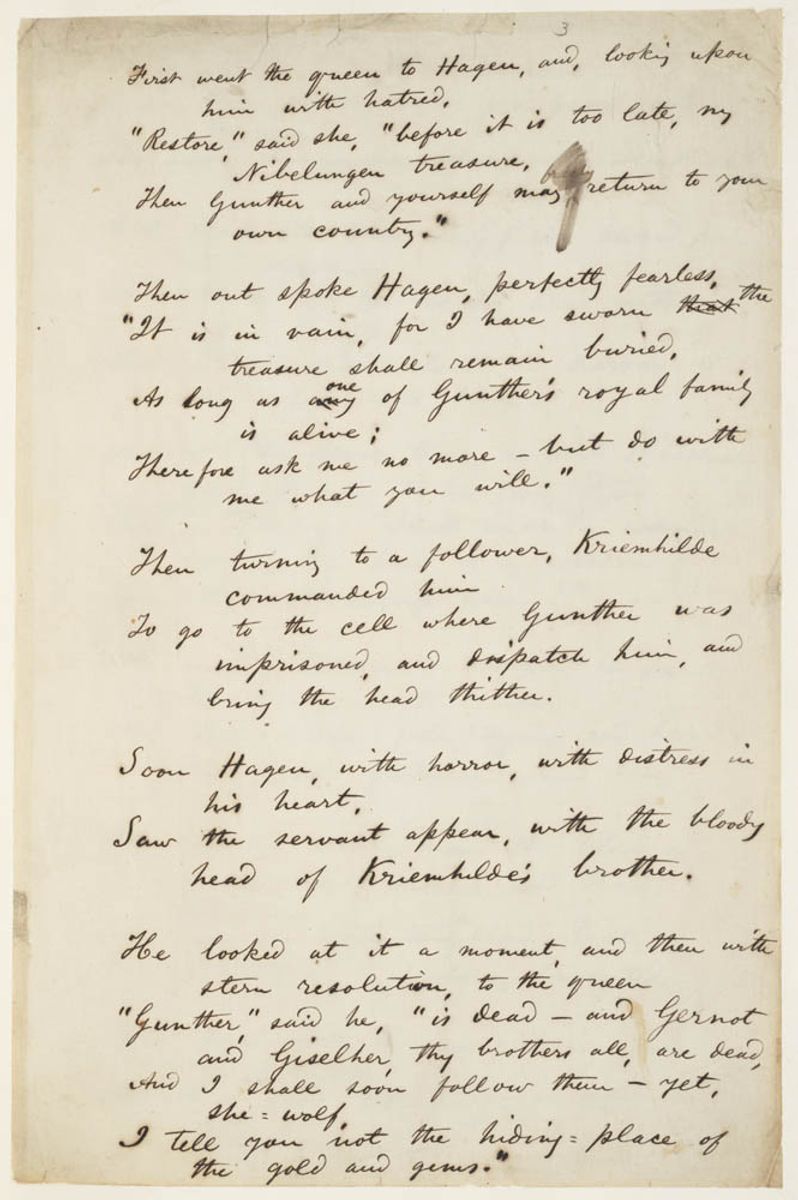
First went the queen to Hagen, and, looking upon
him with hatred,
"Restore," said she, "before it is too late, my
Nibelungen treasure,
Then Gunther and yourself may
3
First went the queen to Hagen, and, looking upon
him with hatred,
"Restore," said she, "before it is too late, my
Nibelungen treasure,
Then Gunther and yourself may  [begin surface 8]
 4
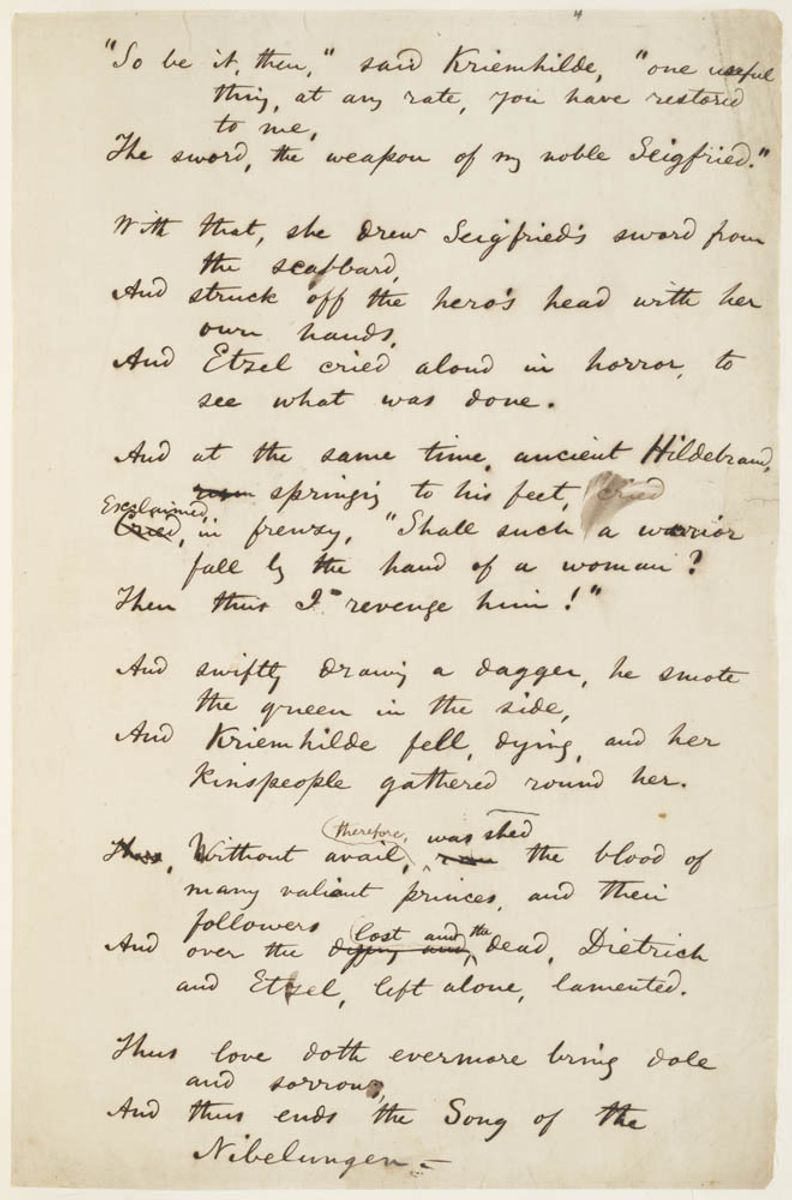
"So be it, then," said Kriemhilde, "one useful
thing, at any rate, you have restored
to me,
The sword, the weapon of my noble Seigfried."
With that, she drew Seigfried's sword from
the scabbard,
And struck off the hero's head with her
own hands,
And Etzel cried aloud in horror, to
see what was done.
And at the same time, ancient Hildebrand,
4
"So be it, then," said Kriemhilde, "one useful
thing, at any rate, you have restored
to me,
The sword, the weapon of my noble Seigfried."
With that, she drew Seigfried's sword from
the scabbard,
And struck off the hero's head with her
own hands,
And Etzel cried aloud in horror, to
see what was done.
And at the same time, ancient Hildebrand,